
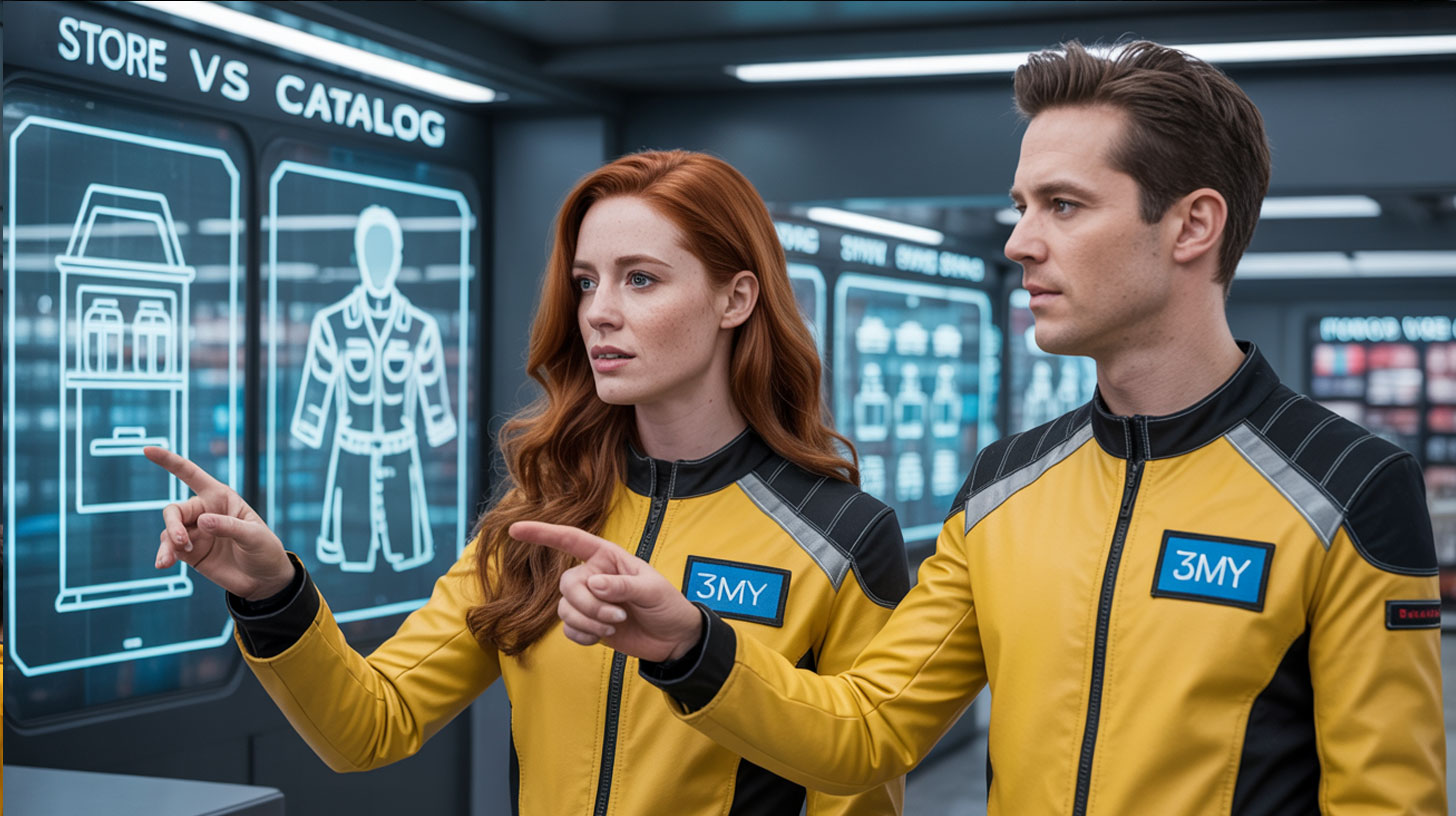
Store vs. Catalog: What’s the Real Difference?
At a glance, both store and catalog websites display products, pricing, and information. But the underlying logic, user experience, and business model behind each are very different.
Let’s break it down.
1. E-Commerce Store: Designed for Transactions
An e-commerce store is a website where users can browse products, add them to cart, pay online, and trigger automated fulfillment processes.
Key Features:
- Shopping cart and checkout functionality
- Online payment gateways (Stripe, PayPal, card processing)
- Product stock management
- Discounts, coupons, and dynamic pricing
- Customer login/accounts and order history
- Integration with CRM, ERP, or warehouse tools
Best For:
- Direct-to-consumer (D2C) businesses
- Retailers and manufacturers with logistics in place
- Subscription models, digital goods, and physical products
Examples:
- Shopify stores
- WooCommerce or Magento setups
- Amazon-like platforms
2. Catalog Website: Designed for Browsing, Not Buying
A catalog site shows your products or services, but without a checkout or online payment system. It’s ideal for businesses that sell via quote, distributor network, or offline communication.
Key Features:
- Product or service listings with detailed specifications
- “Request a Quote” or “Add to Inquiry List” buttons
- Contact forms or embedded messengers
- Downloadable brochures or technical sheets
- Often paired with B2B sales workflows
Best For:
- Wholesale or B2B companies
- Service providers with custom pricing
- Complex product offerings requiring consultation
- Distributors, manufacturers, and contractors
Examples:
- Construction equipment suppliers
- Industrial parts catalogs
- Agencies offering packages or tiered services
Quick Comparison Table
| Feature | E-Commerce Store | Catalog Website |
|---|---|---|
| Buy Online | ✔ Yes | ✘ No |
| Payment Integration | ✔ | ✘ |
| Cart & Checkout | ✔ | ✘ |
| Quote Request / Inquiry | Optional | ✔ Core feature |
| Suited For B2C | ✔ | ✔ (info only) |
| Suited For B2B | ✔ (with customization) | ✔ Native fit |
| SEO Optimized | ✔ Product pages | ✔ But needs more conversion UX |
| User Accounts | ✔ | ✘ / Optional |
How It Impacts UX and Marketing
- E-commerce stores are designed for conversion — think “buy now” buttons, upsells, urgency.
- Catalog sites focus on product education and lead generation—think technical specs, request forms, and follow-up sales.
If your users are comparing specs and calling for pricing, a catalog site reduces friction.
If they want to buy on impulse or in a few clicks, they need a store.
Hybrid Models: Can You Combine Both?
Absolutely. In fact, many modern websites blend catalog and e-commerce features and for good reason.
Your business might not fit into a single box. You may sell simple products online while offering more complex, customizable solutions that require consultation.
Real-World Hybrid Examples:
- Enable “Buy Now” only on selected SKUs, while other items use “Request a Quote”
- Showcase technical products in a catalog layout, but sell related parts or accessories through a shopping cart
- Restrict pricing and checkout to logged-in users, common for B2B distributors and wholesalers
- Use WooCommerce, Shopify Plus, or Headless CMS to create flexible interfaces where catalog and cart coexist
With the right platform, you don’t have to choose between one or the other—you can build what your users actually need.

Visualizing a Hybrid Site Structure:
Let users request quotes for complex items while enabling direct checkout for ready-to-sell products.
What We Do at 3MY
We don’t believe in generic templates or one-size-fits-all websites.
At 3MY, we design systems that match your sales strategy, product logic, and customer behavior.
Whether you’re:
- Launching a full-featured online store
- Transforming a PDF catalog into a responsive digital platform
- Or creating a hybrid solution that evolves with your business
We build it around your goals – clean, scalable, and conversion-focused.
Not Sure Which Website Structure Fits?
Let’s figure it out together.
We’ll assess your current offering, buyer journey, and future plans—then give you a clear recommendation with no fluff.
Or email us at info@3my.org
3MY – Where your business model meets the right website architecture.