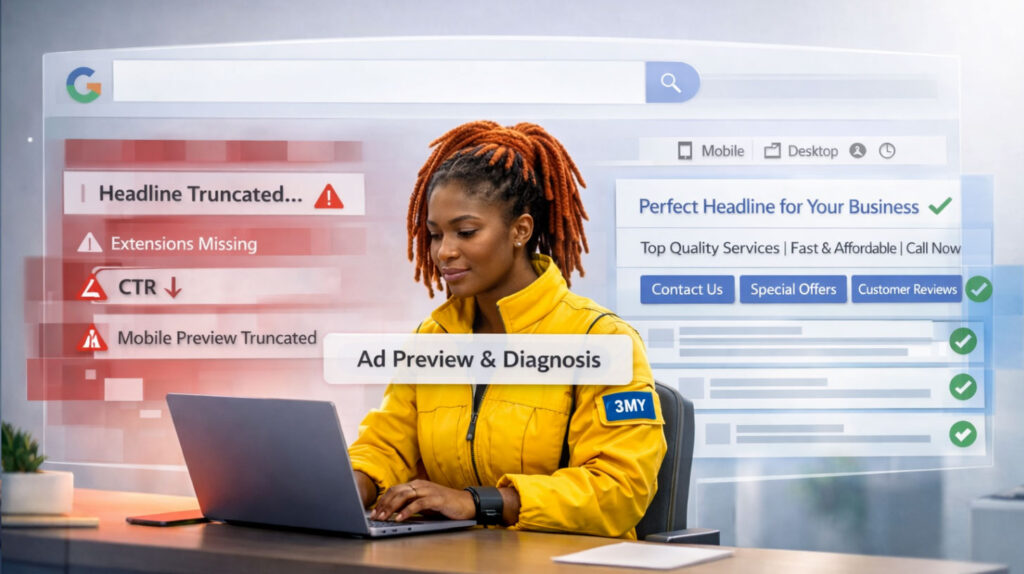


Keywords are the backbone of any Google Ads campaign. They dictate when your ads appear, who sees them, and how closely your traffic aligns with your goals. A robust keyword strategy helps lower CPC, boost CTR, and attract customers who are ready to convert. But selecting the right keywords is more than just compiling a list—it’s about understanding user intent, search trends, and how Google’s algorithm interprets your choices.
1. Why Keyword Selection Matters
The success or failure of a campaign often comes down to keyword quality. Choosing the wrong keywords can:
- Drain your budget on irrelevant clicks.
- Lead to poor-quality traffic with low conversion rates.
- Reduce your Quality Score, making future ads more expensive.
The goal is to find a balance:
- Broad enough to reach a wide audience.
- Specific enough to ensure the traffic is relevant and valuable.
Imagine bidding on the word “marketing”. While it has huge search volume, your ads could appear for queries like “free marketing tutorials” or “what is marketing”, neither of which align with a paid service offering.
2. The Keyword Research Process
A great keyword strategy begins with understanding your customers and the market landscape.
Step 1: Analyze Your Market and Audience
- Map out the buyer’s journey: Awareness, Consideration, Decision.
- Identify pain points and how users phrase them in searches.
- Examine competitor ad copy and landing pages for insight into their targeting.
Step 2: Use the Right Tools for Discovery
| Tool | Purpose |
|---|---|
| Google Keyword Planner | Discover search volume and competition data |
| SEMrush / Ahrefs | Analyze competitors and find keyword gaps |
| Ubersuggest | Identify related long-tail keywords |
| Google Trends | Spot seasonality and rising terms |
| AnswerThePublic | Uncover question-based search queries |
These tools provide a mix of quantitative data (volume, CPC) and qualitative insights (user intent, phrasing).
Step 3: Group Keywords by Intent
- Informational: “how to fix leaky faucet”
- Commercial: “plumbing services near me”
- Transactional: “hire plumber in Chicago”
Tightly grouped ad sets improve relevance and Quality Scores.
Step 4: Build Negative Keyword Lists
Filter out terms that attract unqualified traffic, like:
- “free,” “download,” “DIY,” “jobs”
- Location mismatches (e.g., excluding other countries)
- Irrelevant verticals (e.g., “plumber salary”)
3. Understanding Keyword Match Types
Google Ads allows you to define how closely a user’s query must match your chosen keywords.
| Match Type | Example | Characteristics |
|---|---|---|
| Broad Match | plastic windows | Wide reach, but high risk of irrelevant traffic |
| Broad Match Modifier | +plastic +windows | Broader reach with more relevance |
| Phrase Match | “plastic windows” | Matches queries containing your phrase |
| Exact Match | [plastic windows] | Matches only the exact term or close variations |
Start campaigns with broad match modifier for discovery, then narrow to phrase or exact match as you identify high performers.
4. Advanced Keyword Optimization Tactics
- Dynamic Keyword Insertion (DKI): Tailor ad copy dynamically to user queries for higher relevance.
- Use SKAGs (Single Keyword Ad Groups): For top performers, create dedicated ad groups with highly tailored copy.
- Leverage Search Terms Report: Regularly audit this report to discover profitable terms and add negatives for poor performers.
- Track Quality Scores: Optimize landing pages and ad relevance to drive up Quality Scores, lowering CPCs.
Example: Progressive Refinement
- Start with broad match modified keywords: +buy +office +chairs
- Analyze conversions: See that “buy ergonomic office chairs” converts well.
- Create exact match ad group: [buy ergonomic office chairs]
- Tailor ad text to match this query.
5. Keyword Strategies for Different Campaign Types
| Campaign Type | Best Practices |
|---|---|
| Search Campaigns | Focus on commercial & transactional intent, use phrase & exact match |
| Display Campaigns | Layer keywords with audience targeting for higher relevance |
| Remarketing Campaigns | Target high-intent queries with tight keyword lists |
| Shopping Campaigns | Optimize product titles & feed with relevant terms |
6. How 3MY Builds High-Impact Keyword Strategies

At 3MY, keyword research isn’t a one-time task—it’s a continuous process of testing and optimization.
Our approach includes:
- Niche and competitor audits to uncover unique opportunities.
- Semantic keyword mapping to guide campaign structure.
- Custom scripts for automated search term cleanup.
- Ongoing A/B testing of keyword combinations and ad copy.
This ensures our clients achieve:
- Higher conversion rates
- Lower cost per acquisition (CPA)
- Improved campaign scalability
Example Workflow: From Discovery to Profitability
- Discovery Phase: Launch broad campaigns to gather data.
- Analysis Phase: Use Search Terms report to identify winning queries.
- Refinement Phase: Shift budget to exact match high performers.
- Scaling Phase: Expand successful keyword sets into new geographies or demographics.
About 3MY 3MY is a results-driven performance marketing agency that helps businesses dominate their markets with intelligent Google Ads strategies. From keyword research and smart bidding to campaign scaling, we ensure your ad spend delivers maximum ROI.
Ready to build a campaign around keywords that convert?