
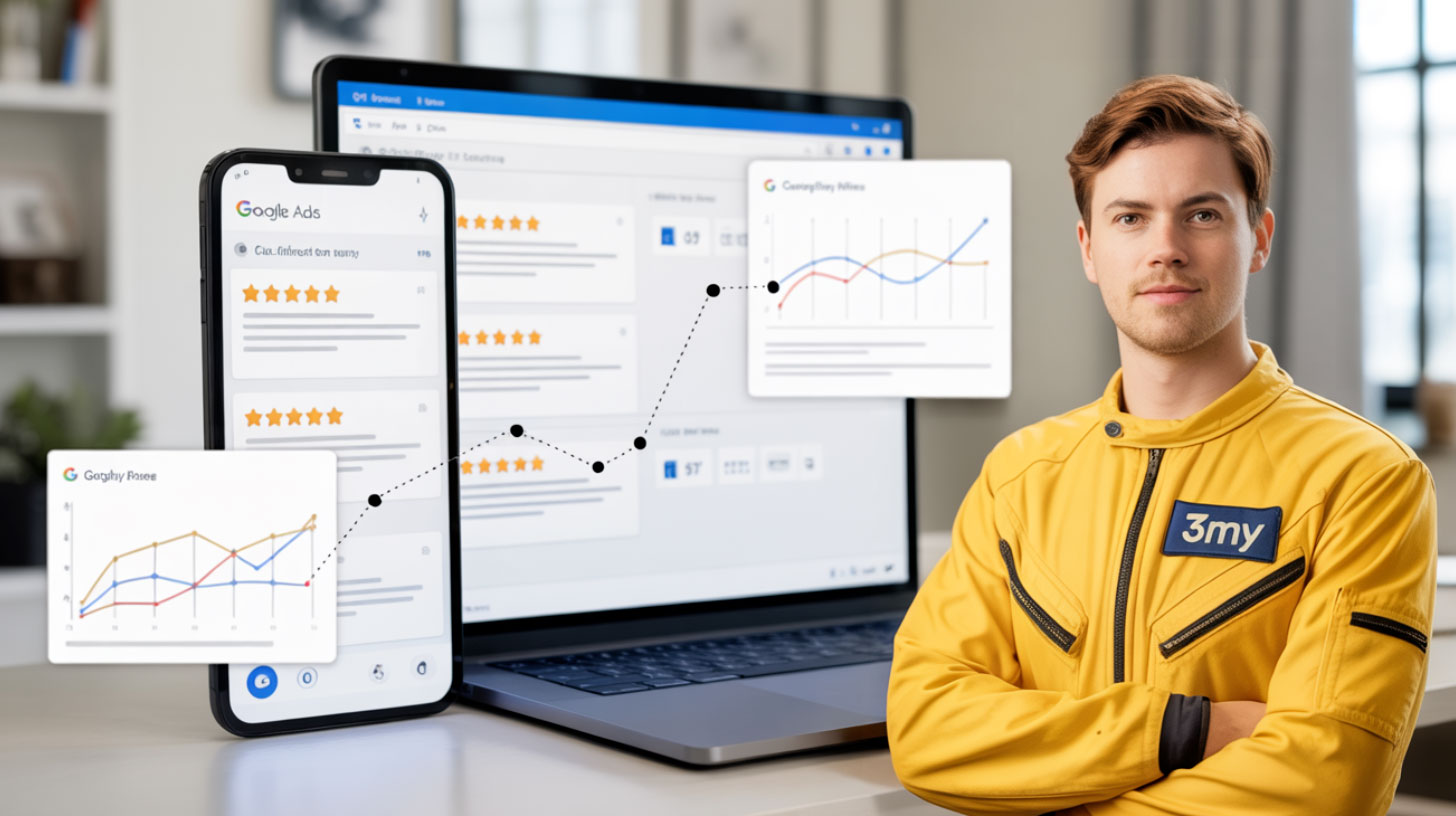
When potential customers see your ads, one of the first things they do—especially on mobile—is look for validation. That validation often comes from reviews: Google Business ratings, testimonials, third-party review platforms. But reviews are more than trust builders. They’re data assets that influence:
- Click-through rates: Ads with high-rated seller extensions get more attention.
- Quality Score: Google evaluates landing page trust and relevance.
- Conversion rates: Positive reviews increase likelihood to purchase or sign up.
- Brand perception: Even well-optimized ads fall flat if users read 2-star reviews right after clicking.
Where to Collect Reviews (And Why Each Matters)
- Google Business Profile (formerly Google My Business)
- Appears directly on SERPs and Maps.
- Affects local ad visibility.
- Used in seller ratings extensions.
- Third-party platforms (Trustpilot, Yelp, Facebook)
- Helps with off-site reputation.
- Expands trust beyond your own assets.
- Some review platforms syndicate to Google Ads.
- Website testimonials & post-purchase surveys
- Boosts trust on landing pages.
- Enables quote snippets in ads.
- Can be turned into structured data (Schema) for SEO and Ads benefits.
- Industry-specific platforms
- TripAdvisor, Capterra, Houzz, etc.
- Useful for vertical campaigns or remarketing audiences.
How to Encourage More High-Quality Reviews
- Automated follow-up emails post-purchase or post-service.
- Incentivize: Offer small rewards for honest reviews (but not payment for positive ones).
- In-store prompts: Use QR codes or tablet kiosks.
- Support-led triggers: Ask after a successful ticket or resolved issue.
- Simplicity: One-click paths directly to Google or Trustpilot review forms.
Note: Quantity matters, but so does recency. Users trust reviews from the last 90 days more than those from last year.
How Reviews Affect Google Ads Directly
Seller Ratings Extensions
- Appear automatically if you have 100+ unique reviews in the past 12 months with an average score of 3.5+
- Increase CTR by up to 10% in eligible ads
- Requires review syndication from Google-approved partners or directly from Google Business Profile
Quality Score
- Google measures landing page experience, which includes trust signals like reviews.
- High-trust pages reduce bounce rate, which indirectly improves Quality Score.
- Structured snippets or “review schema” help match ad text to on-site credibility.
Ad Copywriting
- Copy pulled from testimonials often performs better than internally written slogans.
- Review phrases give insight into customer language (great for ad testing).
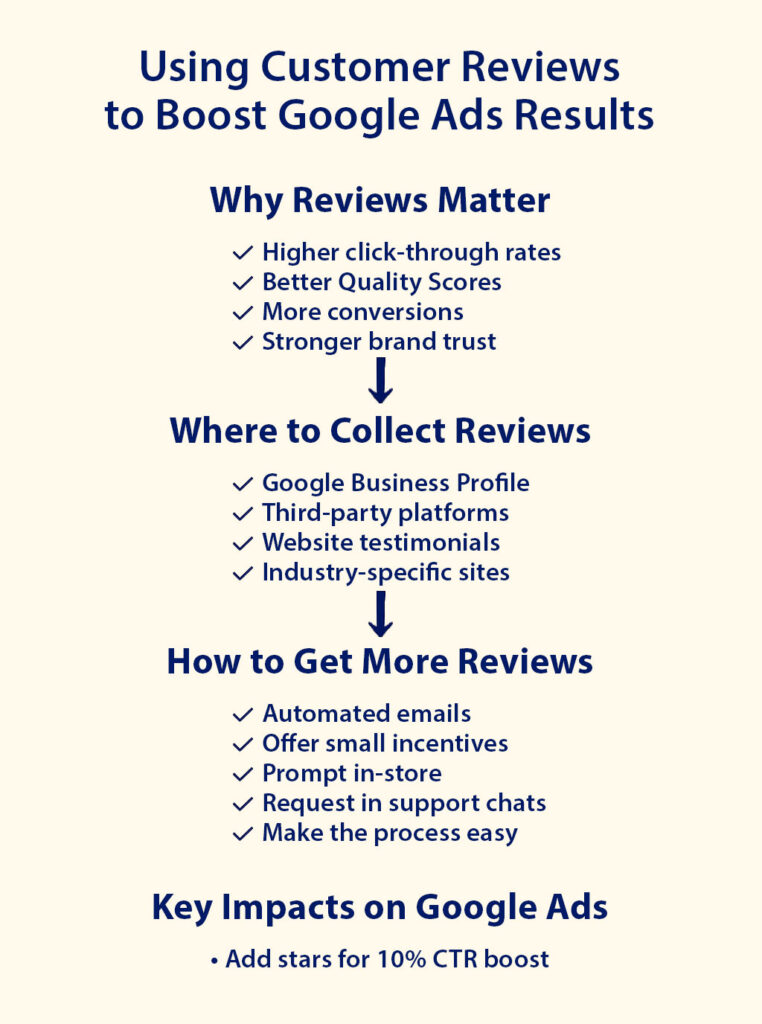
How Customer Reviews Influence Ad Performance
This visual shows how strategic use of reviews impacts ad extensions, Quality Score, and conversion rates. Use this map to connect your reputation data with measurable ad outcomes.
Analyzing Review Data (Not Just Reading It)
Use reviews as feedback loops:
- Identify objections: Negative reviews often highlight real friction (e.g. slow support, unclear pricing).
- Spot keyword trends: Repeating phrases = ad copy fuel.
- Segment by source: Compare Google vs. Trustpilot vs. Facebook tone and themes.
- Score by funnel stage: Early-stage reviews might focus on customer service. Post-sale ones on value.
Tools:
- Google’s Reviews tab in Business Profile dashboard
- Trustpilot analytics
- Zapier + Google Sheets to auto-log and tag reviews by source, score, keyword
What We Do at 3MY

We integrate review data into campaign strategy from day one:
- Review audits before campaign launch
- Schema implementation on landing pages for review markup
- Dynamic ad copy testing using real customer language
- UTM-tagged review requests to track which channels bring in which types of reviews
- Weekly feedback loops between review themes and ad performance metrics
Our goal? Make sure reviews don’t just build trust—they build measurable results.
Final Word: Ads Sell the Click. Reviews Sell the Outcome.
If your ads promise quality but your public reviews say otherwise, you’re not just leaking conversions—you’re paying for mistrust. Fixing this misalignment is often the fastest path to better performance without increasing budget.
Want a Review & Reputation Audit as Part of Your Google Ads Strategy?
We’ll assess your review ecosystem, clean up your assets, and help you turn your online reputation into a conversion driver.