


SEO is less about trends than about structure. If you own a business, you don’t need to memorize jargon like “E-E-A-T,” “semantic indexing,” or “zero-click results.” What you need is simple: a site that gets seen by the right people, at the right time, and turns visitors into leads or buyers.
This guide skips the fluff. Here’s what actually works — and how to build it into your business without hiring a full-time SEO team.
What Is SEO — Practically Speaking?
Search Engine Optimization (SEO) is the process of making your website easier to find, understand, and trust — for both people and search engines.
SEO is not magic. It’s infrastructure.
- Technical: Your site is crawlable, mobile-friendly, and fast
- Content: You answer the right questions with useful, structured content
- Links: Other sites mention or link to your site as a credible source
- Experience: Visitors stay, explore, and convert — because your site is actually helpful
No tricks. Just alignment.
What Business Owners Actually Need from SEO
| Need | SEO Outcome | Priority |
|---|---|---|
| Be found by new customers | Search visibility for relevant queries | Critical |
| Build trust and authority | Clear, well-written content and structured pages | High |
| Compete locally or in a niche | Local SEO + long-tail keyword strategy | Critical |
| Scale content without waste | Content plan based on real demand and intent | High |
| Measure what matters | Analytics tied to conversions, not just visits | Essential |
You don’t need 100 blog posts. You need 10 pages that actually bring leads.
The 5-Part SEO Setup for Real Businesses
1. Start with Site Health
- Ensure HTTPS is active
- Page experience inside Google’s published Core Web Vitals thresholds
- Mobile-friendly layout
- Clean URL structure (yourdomain.com/service-name)
- Fix broken links, duplicate content, and 404 errors
Tool tip: Use Google Search Console and PageSpeed Insights — both free.
One caution about speed. “Under two seconds” is a number that circulates in SEO advice without a source behind it. Google publishes actual numbers instead: largest contentful paint under 2.5 seconds, interaction to next paint under 200 milliseconds, cumulative layout shift under 0.1 — and a page counts as passing when 75% of real visits stay inside them. That last part matters more than the numbers: the score comes from your visitors on their phones, not from one test you ran on office fibre.
2. Write for Search Intent, Not Keywords
Google doesn’t rank keywords. It ranks answers.
- Use plain language: “best CRM for dentists” > “enterprise SaaS CRM stack”
- Prioritize pages like:
- Product/service overviews
- Comparison pages (vs. competitors)
- FAQs and how-to guides
- Structured data where it genuinely fits — but read the note below before you spend a day on FAQ markup
Pro tip: Search your main offer in Google — look at “People Also Ask”. Answer those.
About that FAQ markup. The advice was sound until August 2023, when Google removed how-to rich results from search altogether and narrowed FAQ rich results to well-known government and health websites. Adding the markup to a plumbing or accounting site no longer changes what shows up. Answer the questions in plain text on the page instead — that still works, and plain answers are what get quoted in AI answers. Deciding which questions deserve a page of their own is a separate exercise, and it starts with what people actually type.
3. Optimize Pages That Matter
Focus on core pages first:
- Homepage
- Service/product pages
- Lead magnet or booking pages
Each page should:
- Have a unique H1 and meta title
- Use one primary keyword naturally
- Include internal links to other key pages
- Load fast, look good, and be skimmable
4. Local SEO (If You Serve a Location)
- Set up and verify Google Business Profile
- Get listed where people in your industry actually look — a handful of relevant directories beats thirty scraped ones
- Embed a Google Map on your contact page
- Use your city/region in H1s and title tags
Worth knowing before you buy a directory package: citations and NAP consistency are industry vocabulary, not Google’s. Google’s own guidance talks about relevance, distance and prominence, and about keeping your Business Profile information accurate and complete. Directory work still helps people find you and confirms your details line up. It is not a ranking dial you can turn.
Review Strategy:
- Ask happy clients to leave reviews on Google
- Reply to all reviews — short, positive, and human
5. Track What Converts (Not Just What Ranks)
You don’t need 10,000 visits. You need 10 buyers.
- Mark calls, form submissions and bookings as key events in GA4 — “goals” was the Universal Analytics word, and only key events can be imported into Google Ads
- Track organic search traffic separately from other channels
- Use UTM links to test blog post or CTA performance
- Update content that underperforms — don’t just add more
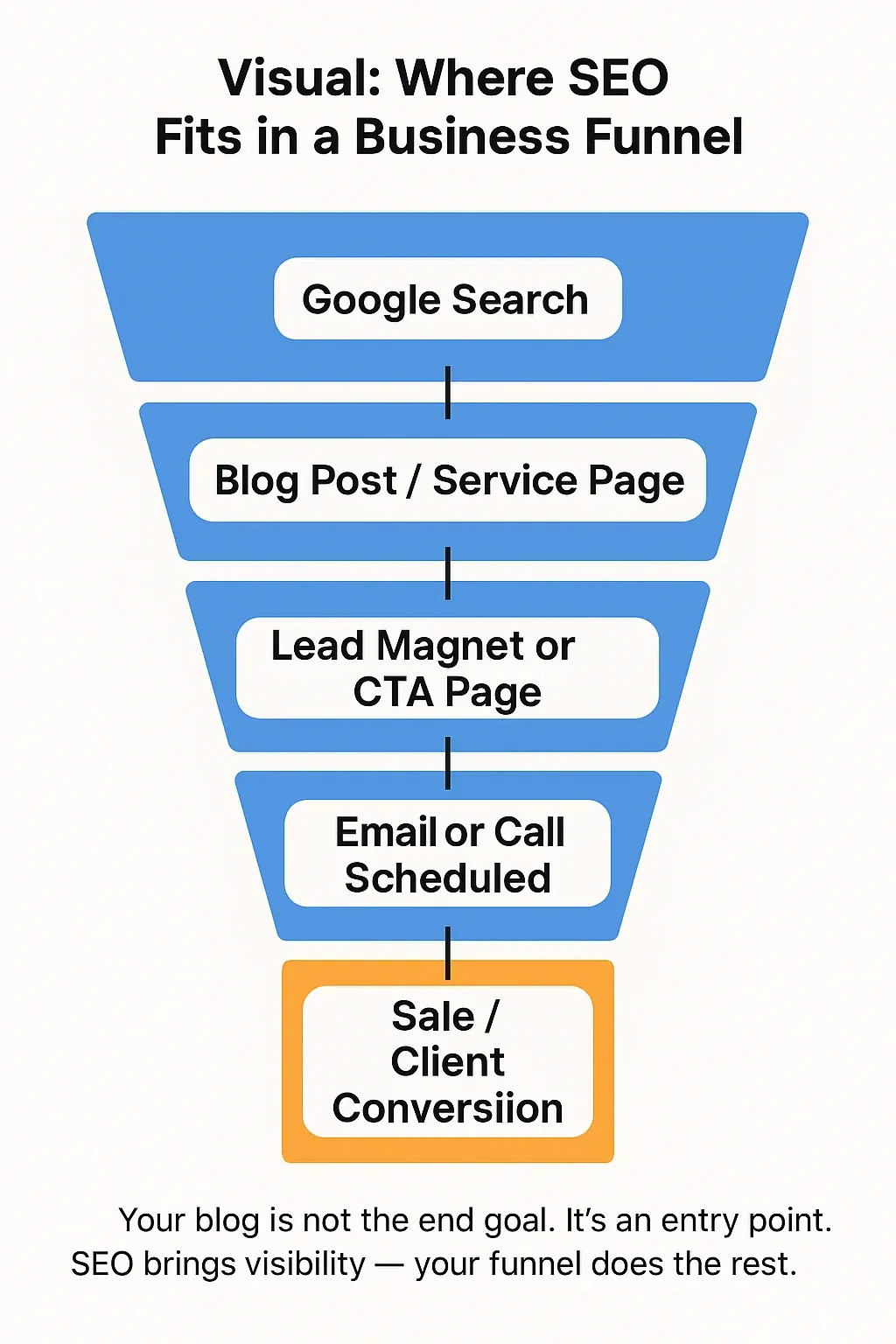
Your blog is not the end goal. It’s an entry point. SEO brings visibility — your funnel does the rest.
Bonus: 5 SEO Myths Business Owners Should Ignore
| Myth | Reality |
|---|---|
| More content = better SEO | Only if it’s relevant, structured, and optimized |
| SEO is one-time setup | It’s ongoing maintenance + strategic updates |
| You need to rank #1 to get leads | A page further down that answers the exact question can still earn the click and the enquiry |
| Only big sites can win | Niche and local sites rank with focused content |
| AI content alone can replace strategy | Without structure and intent, AI content fails |
Final Word
SEO is not about buzzwords or hacks. It’s about clarity, consistency, and connection.
If your site:
- Loads slowly
- Has vague or outdated pages
- Doesn’t answer specific user questions
- Or hides your value behind bad UX
…then no amount of SEO “tactics” will help.
Want a site that quietly outranks competitors and brings real leads? Start with the basics. Structure, content, trust — and a clear reason for people to stick around.
One practical note on who pays for all this writing. When we build a site, the copy is part of the price rather than a line item added later: a business site of up to eight pages is $1,900, and writing every page — structure, headings, the text itself — is included. It matters here because most SEO advice quietly assumes somebody will produce ten good pages for free. Usually nobody does, and the site stays thin.
Need help? At 3MY, we build SEO strategies that make sense — even if you’re not an SEO person.