


Every comparison of these two platforms ends the same way: use both. That answer is correct, and it’s also the most expensive one you can give a business that only has money for one channel this quarter. Before splitting a small budget between two ad accounts, ask a smaller question first: which platform pays you back before the budget runs out.
The two platforms don’t compete for the same moment. One waits for someone to ask for what you sell. The other creates that moment by putting your product in front of someone who wasn’t looking for it yet. The difference is why a side-by-side comparison of their cost-per-click or cost-per-lead numbers is closer to comparing two different sports than two versions of the same one.
We manage both platforms for clients and get paid the same either way, so there’s no channel we’re quietly steering you toward.

What Actually Triggers a Google or Facebook Ad
Google’s own auction help page puts it plainly: “Every time an ad appears, it goes through what we call the ad auction, a process that decides which ads are eligible to appear and in which order.” That auction runs off a search — a person typed something, and Google is choosing which ads answer it. Rank isn’t decided by bid alone either: Google’s Ad Rank explanation folds in ad and landing-page quality alongside the bid, which is why a smaller advertiser with a tighter, more relevant ad can outrank a bigger budget.
Meta’s auction starts from a different trigger. Its own ad auction page puts it this way: “Every time there’s a chance to show your ad to someone in your audience across Meta platforms like Facebook, Instagram and Messenger, it enters an ad auction.” There’s no search to answer — Meta is deciding whether to interrupt someone’s feed with your ad, based on who you told it your audience is. Meta also says its system “looks at a number of factors equally to determine which ad is displayed,” not just who’s willing to pay the most.
Neither mechanism is better in the abstract — which one earns back its budget first depends on what you sell and who’s looking for it, and that’s what the three questions below settle.
| Google Ads | Meta (Facebook) Ads | |
| What starts the auction | A search query | A chance to reach someone in your audience |
| What you’re buying | Intent that already exists | Attention you have to create |
| Where the ad competes | Against other answers to the same search | Against everything else in someone’s feed |
If Google is the answer, a second decision follows — which campaign type actually runs your auction, covered separately in Performance Max vs. Search campaigns.
Three Questions to Answer Before You Spend Anything
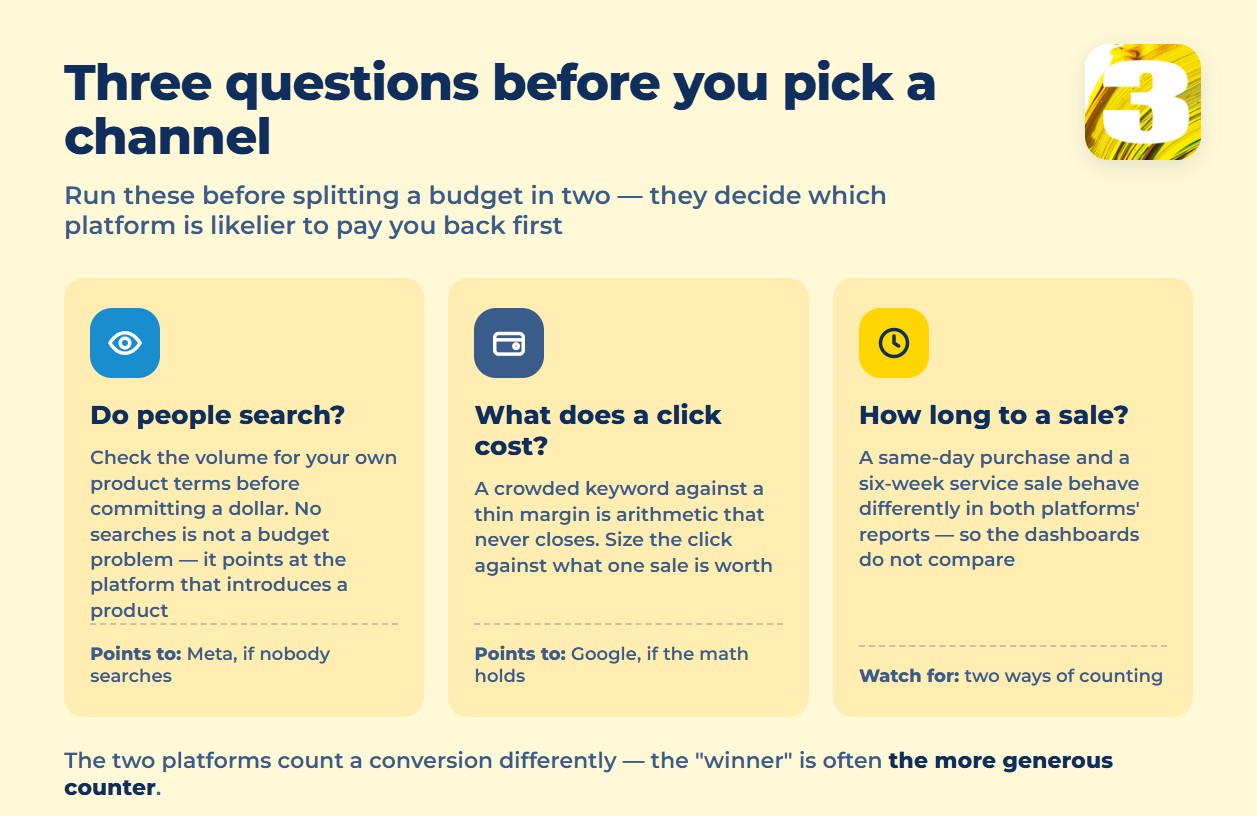
Do people search for what you sell? This is checkable, not guessable — run your product and service terms through Google’s Keyword Planner before you commit a dollar. Zero searches a month isn’t a problem a bigger budget fixes; it’s a sign nobody types your product into a search bar yet, which points toward Meta’s strength at introducing a product rather than waiting for it to be asked for.
What does a click cost in your niche? A crowded keyword and a thin margin per sale can make Google Ads math that never closes, however good the ad is. what a month of Google Ads actually costs walks through sizing that cost against what a click is actually worth before committing a budget to either platform.
How long does it take from first contact to a sale? A same-day impulse purchase and a service sold over a six-week cycle behave completely differently in both systems’ reporting — a gap that’s exactly what breaks the comparison in the next section.
The Attribution Problem Nobody Puts in These Comparisons
Here’s what most “Google vs Facebook” comparisons skip: the two platforms don’t count a conversion the same way, so their reported numbers were never built to sit side by side. Google’s default counting is anchored to a click — someone clicked, then converted. Meta counts conversions that follow a view of the ad too, not just a click, on the logic that seeing an ad in a feed can influence a purchase days later without a click ever happening.
That difference means a cost-per-acquisition number from a Google Ads dashboard and one from a Meta Ads dashboard aren’t measuring the same event. Stack them in a table and whichever platform counts more generously looks like the “winner” — not because it performed better, but because it’s grading its own homework differently. Most public comparisons never mention this, which is how a useless verdict ends up looking authoritative.
We don’t have to take either platform’s word for where a lead came from. The lead-tracking plugin we run — on our own site and on client accounts — logs where a form submission or call originated, independently of what either ad platform reports back. When two dashboards both claim credit for the same lead, that tool settles it, not the more flattering number. If you’re not even sure your own account is reporting correctly, that’s worth checking before you compare anything. There’s a separate piece on the five checks a real account audit starts with.
What Clicks Actually Cost, Roughly
For scale, not for a budget you can plan around: according to data from WordStream, a review of more than 13,000 US search campaigns from April 2025 through March 2026 put the average Google Ads cost per click at $5.42, ranging from $1.63 in arts and entertainment to $9.87 in legal services. A separate WordStream review of US Facebook campaigns, run over a different window — April 2024 to June 2025 — put the average cost per click at $0.70 for traffic-goal campaigns and $1.92 for lead-goal campaigns. Both samples are American and mix wildly different industries into one average — neither tells you what a click costs in your own account.
Google Ads vs Facebook Ads: Which One Goes First?
If people already search for what you sell and the click cost in your niche pencils out against your margin, start with Google Ads — you’re catching demand that already exists, the cheaper kind to sell against. If nobody types your product into a search bar yet, or your sales cycle is short enough that a scroll-and-buy moment matters more than an answered question, start with Meta Ads instead — you’re creating demand rather than waiting for it.
If both questions come back “yes,” the honest advice is still “run both” — just not the free advice it sounds like. Fund the channel that answered more of the three questions first, prove it’s profitable with tracking you trust, then add the second once you have a baseline to compare it against instead of two unrelated sets of numbers.
We’re Google Partner and Meta Certified, which mostly means we don’t have a channel to defend — we get asked “which one” constantly, and the answer is always the test above, not whichever platform we happen to sell harder.
The Part Worth Remembering
Run the three questions before you write either check, and don’t take either platform’s dashboard as the final word on which one won — that’s what independent tracking is for. Want a second set of eyes on your numbers?